


Our Services
With over 600 accredited testing methods and cutting-edge technology.


About LMATS
Leading the Way in Advanced Testing & Inspection
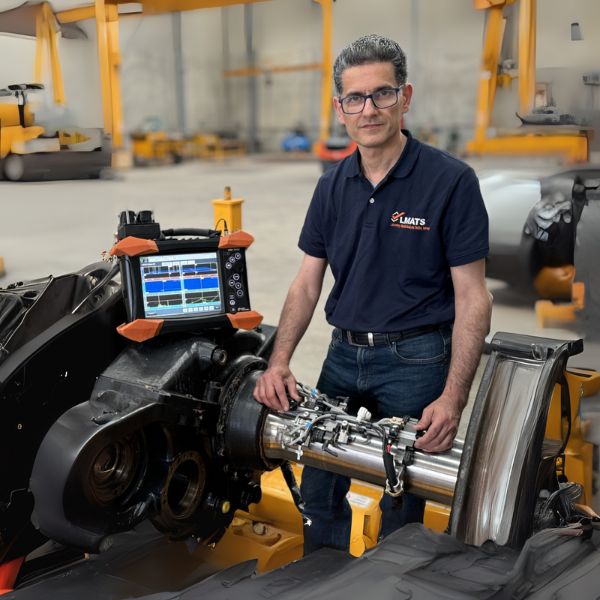
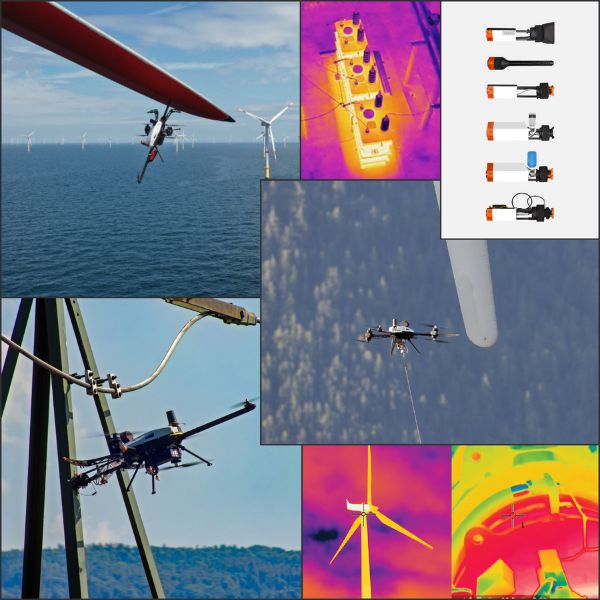
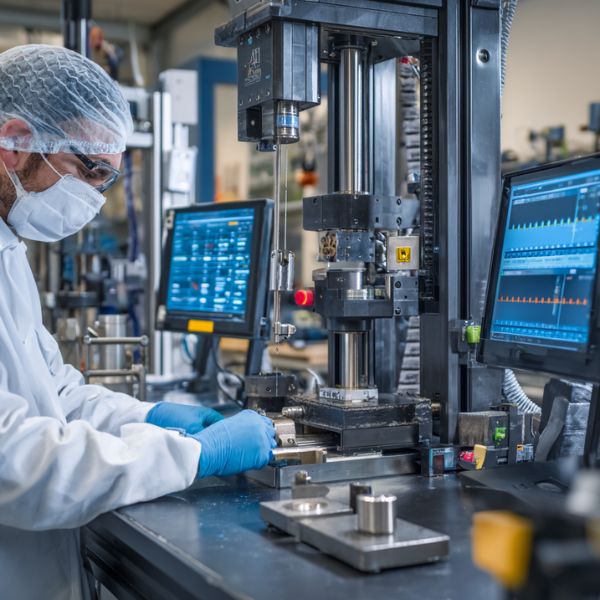
LMATS is an ISO/IEC 17025 and ISO 17020 accredited Australian company delivering over 600 methods of testing, inspection, and assessment across multiple industries.
Established: 2008 in Melbourne
National Presence: 10+ locations across VIC, NSW, QLD, WA
Projects Delivered: 100,000+
Clients Served: 200+ government departments, 3000+ companies
Powered by cloud-based OMS software with Level 3 NDT professionals and engineering qualifications. Your trusted partner for precision testing, sustainability-driven solutions, and real-time insights.
Learn More About Us
Passivation is the process by which a stainless steel will spontaneously form a chemically inactive oxide film on the surface, when exposed to air or other oxygen-containing environments, provided that the surface has been thoroughly cleaned or descaled. 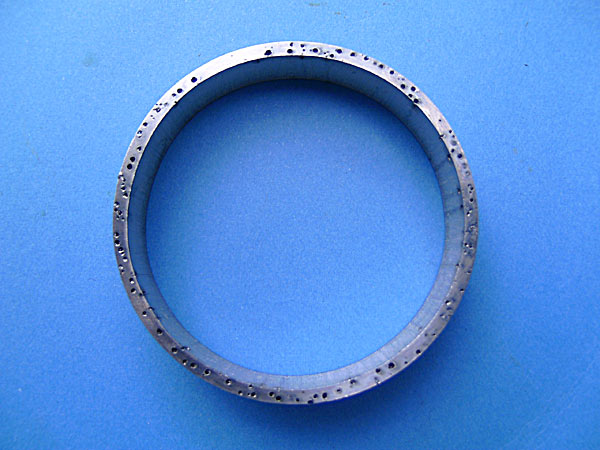
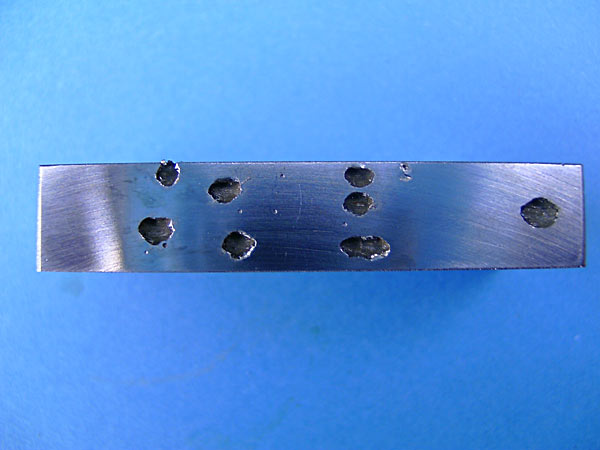
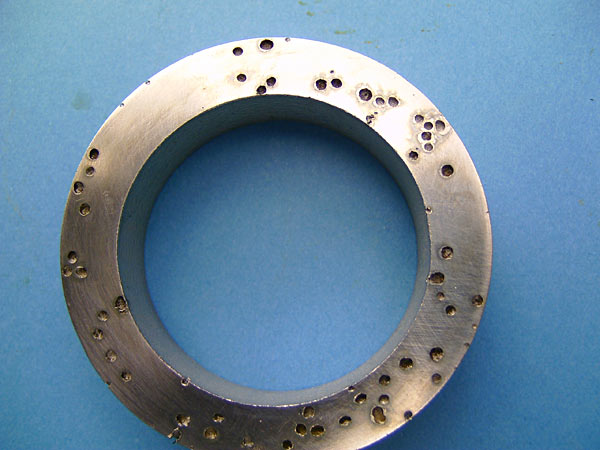
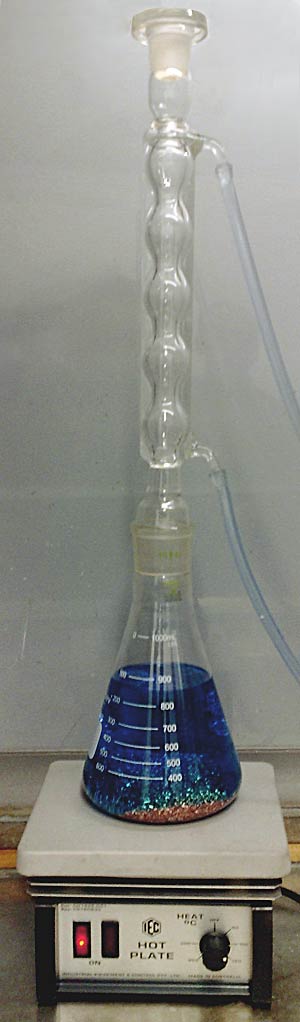
Removal of exogenous iron or iron compounds from the surface of a stainless steel by means of a chemical dissolution, most typically by a treatment with mild oxidant such as a nitric acid solution that will remove the surface contamination but will not significantly affect the stainless steel itself is part of the passivation process.
The chemical treatment will enhance the spontaneous formation of the protective passive film. Before, during or after passivation the components are often contaminated with unacceptable material that may impair the normal corrosion resistance.
NOTE:
Chemcal testing for corrosion resistance overlaps with Corrosion Testing as the methods and aims of the tests are similar please also see the Corrosion Testing Section for further details.
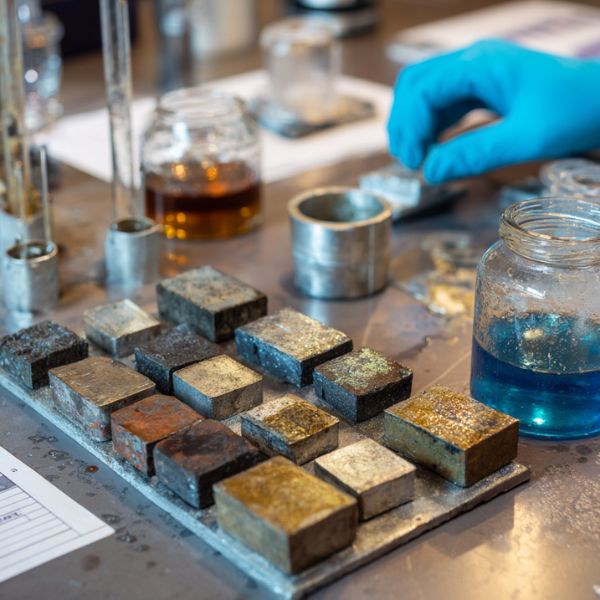
LMATS performs contamination test in Melbourne and Sydney to detect unacceptable free iron, oxide, scale, rust, grease, oil, carbonaceous or other residual chemical films, soil, particles, metal chips, dirt, or other non-volatile deposits in accordance with ASTM A380 Section 7.
LMATS holds proven procedures for High Humidity test, Black light test, Salt Spray test and NATA accreditation in Copper Sulphate test and Ferroxyl test in accordance with ASTM A967 Practice D, EXXON Mobil and ESSO Shell specification.
Passivation is the process by which a stainless steel will spontaneously form a chemically inactive oxide film on the surface when exposed to air orother oxygen-containing environments provided that the surface has been thoroughly cleaned or descaled.
Removal of exogenous iron or iron compounds from the surface of a stainless steel by means of a chemical dissolution, most typically by a treatment with mild oxidant such as a nitric acid solution that will remove the surface contamination but will not significantly affect the stainless steel itself is part of the passivation process.
The chemical treatment will enhance the spontaneous formation of the protective passive film.
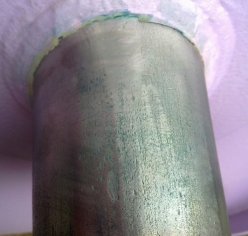
Before, during or after passivation the components are often contaminated with unacceptable material that may impair the normal corrosion resistance.
LMATS performs NATA Accredited contamination test to detect unacceptable free iron, oxide, scale, rust, grease, oil, carbonaceous or other residual chemical films, soil, particles, metal chips, dirt, or other non-volatile deposits in accordance with ASTM A380 Section 7.
LMATS holds proven procedures for High Humidity test, Black light test, Salt Spray test and NATA accreditation in Copper Sulphate test and Ferroxyl test in accordance with ASTM A967 Practice D, EXXON Mobil and ESSO Shell specification. LMATS offers above ferroxyl tests from Melbourne and Sydney laboratories.
 ISO/IEC 17025 & 17020 accredited